
‘Hefty penalties’ with TRIS payment failures, SMSFs warned
With clients who fail to pay the minimum pension payments for TRISs potentially up for illegal early release and significant penalties, SMSF practitioners have been urged to pay close attention in this area.
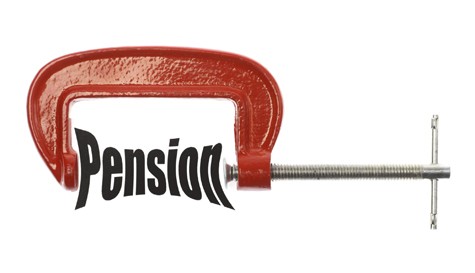
With failure to pay minimum pension payments for TRISs potentially resulting in illegal early release and significant penalties, SMSF practitioners have been urged to pay close attention to their clients’ pension payments.
Speaking in a webinar, DBA Lawyers director Daniel Butler said SMSF clients who have a transition to retirement income streams (TRISs) and have not yet retired can land themselves in serious trouble where they fail to meet the minimum pension payments.
Where a client fails to make the minimum pension payments, the pension ceases for that income year and the withdrawn amounts become a lump sum, he explained.
Typically, most TRISs contain preserved money only, and it is only possible for a member to take preserved money as a lump sum once the member has retired, he said.
“If it is preserved money then effectively you have an early release on your hands,” warned Mr Butler.
Therefore, unless the member has an unrestricted non-preserved amount, the fund has contravened a very important operating standard and the ATO could decide to “apply the full force of the law”, he cautioned.
“[Consequently], the client could get slammed with fully assessable income, even though the money from the TRIS was tax-free,” he said.
“Not only that, but they could potentially get an admin penalty of $4,200, so that’s a hefty penalty. If the client doesn’t have a corporate trustee, then that penalty amount could be doubled or tripled depending on the number of members in the fund.”
Mr Butler said it is vital therefore that SMSF practitioners stress to their clients the serious consequences that can arise from failing to make the minimum pension payments for their TRIS, especially where the client hasn’t retired.
Miranda Brownlee
26 October 2018
smsfadviser.com
Hot Issues
- Super versus trusts: What is the best option with Div 296?
- Thinking of establishing an SMSF? Don’t skip reading the rules
- Investment and economic outlook, February 2026
- Coercive control in SMSF becoming a hot issue
- Are downsizer contributions losing steam?
- What to look for when choosing a financial adviser
- AI use needed with proper safeguards
- Most Reliable Car Brands in 2026
- ASIC targeting high-pressure sales and inappropriate advice
- Investment and economic outlook, January 2026
- Australians not underspending their super
- Five financial steps for the new year
- ASIC warns investors on pump and dump scammers
- Don’t confuse contribution with roll-over when using proceeds from small business sale
- Missed SG exemption may not be problem
- Rare and vanishing: Animals That May Go Extinct Soon
- It’s super hump month. Make the most of it
- Three timeless investing lessons from Warren Buffett
- 2026 outlook: Economic upside, stock market downside
- Care needed with ceased legacy pensions
- What had the biggest impact on the sector in 2025?
- What does 2026 look like in the SMSF sector?
- It’s not just Div 296 that could face changes in 2026
- Which country produces the most electricity annually?
- AI exuberance: Economic upside, stock market downside
- Becoming a member of an SMSF is easy, but there are other things that need to be considered
- Investment and economic outlook, November 2025
- Move assets before death to avoid tax implications
- ATO issues warning about super schemes